


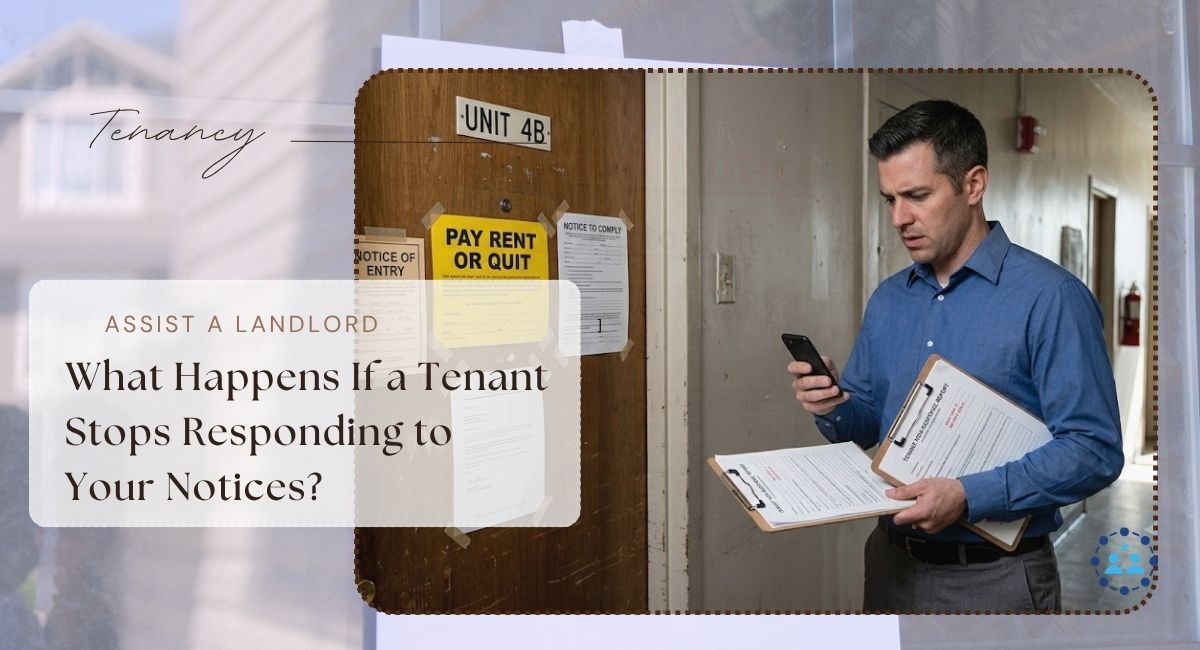
What Happens If a Tenant Stops Responding to Your Notices?
You have served the notice. You have waited the required time. And then, nothing. No call, no text, no reply to the letter you posted through the door. For many landlords across the UK, this silence is more unsettling than an argument would be, because at least an argument tells you where you stand.
A tenant who ignores an eviction notice is not unusual, but it is a situation that needs careful handling. React the wrong way and you risk delaying possession by weeks or months. React the right way and you keep the process moving, even without the tenant’s cooperation.
This guide walks through why tenants go quiet, what the law allows you to do about it, and how to move a stalled situation into a possession claim without making costly mistakes along the way.
Why Tenants Stop Responding to Notices
Landlords often assume silence means defiance, but the reasons behind it vary considerably. Understanding the likely cause can shape how you respond.
Some tenants simply do not understand what a Section 8 notice means and freeze rather than engage. Others are embarrassed about rent arrears and avoid contact because they feel there is nothing useful to say. A smaller number are deliberately avoiding the process, hoping that if they ignore it for long enough, it will go away.
There are also practical explanations. The tenant may have moved out already without informing you, leaving the property standing empty while post piles up. They may be dealing with illness, a family crisis, or a change in circumstances that has nothing to do with the tenancy itself. In a small number of cases, correspondence genuinely does not reach them, particularly if contact details are outdated or the notice was posted to an address they no longer check regularly.
None of these possibilities change your legal position, but they do affect how you approach the next steps. A tenant hiding from embarrassment might respond to a calm, non-confrontational letter. A tenant who has already left needs a different kind of follow up, closer to tracing than communication.
Is Silence the Same as Refusal?
This is one of the most common questions landlords ask, and the answer is no, not automatically. Silence is not consent to leave, and it is not the same as a tenant formally disputing the notice either. It simply means you do not have confirmation either way.
Under UK housing law, a valid notice does not require the tenant to acknowledge it for it to take legal effect. Once a Section 8 notice has been correctly served, with the correct notice period and supporting documentation such as a valid EPC, gas safety certificate, and deposit protection information, the notice period runs regardless of whether the tenant responds.
What silence does mean is that you cannot rely on a mutual agreement to end the tenancy. If the tenant does not leave voluntarily by the date given in the notice, you cannot simply change the locks or remove their belongings. Doing so would be an illegal eviction, and it carries serious legal and financial consequences for the landlord, regardless of how justified the situation may feel. The only lawful route forward when a tenant refuses to leave, or refuses to engage at all, is court action.
What the Law Says When a Tenant Ignores an Eviction Notice
England and Wales operate two main notice routes, and the one you used affects what happens next.
Section 8 Notices
A Section 8 notice is grounds based, commonly used for rent arrears, anti-social behaviour, or breach of tenancy terms. If you are serving a Section 8 notice, you must specify the ground or grounds relied upon, and some grounds require you to prove your case in court rather than relying on an accelerated process. A tenant ignoring a Section 8 notice does not weaken your case, but it does mean you should be ready to present clear evidence, such as a rent statement or record of the breach, at the hearing.
In both cases, a tenant’s failure to respond does not stop the clock. It simply means the matter is more likely to end up in front of a judge rather than being resolved informally.
Steps to Take When a Tenant Stops Communicating
Before assuming court action is the only path, there are a few practical steps worth taking, partly because they strengthen your position later if the case does go to court, and partly because they occasionally resolve the issue without one.
Document Every Attempt at Contact
Keep a written log of every call, text, email, and letter, along with dates and outcomes. If the case reaches a possession hearing, this record demonstrates that you acted reasonably and gave the tenant every opportunity to engage before pursuing court action. Judges tend to view landlords who kept thorough records more favourably than those who cannot show a clear timeline.
Try a Different Method of Contact
If phone calls go unanswered, a formal letter sent by recorded delivery adds a paper trail and may prompt a response that informal messages did not. Some landlords find that involving a neutral third party, such as a letting agent or mediator, changes the tone of the conversation enough for a tenant to re-engage. If a dispute rather than simple avoidance is at the root of the silence, it can be worth reviewing whether mediation could resolve things before court action becomes necessary.
Check Whether the Tenant Has Actually Left
Sometimes what looks like a tenant ignoring notices is actually a tenant who has already moved out without notice. If post is accumulating and there are no signs of activity at the property, it is worth establishing this before assuming the worst. Where a tenant appears to have disappeared entirely and rent arrears remain outstanding, professional tenant tracing services can help locate them, which matters both for recovering arrears and for confirming the tenancy status.
Avoid Anything That Could Be Seen as Harassment
It can be tempting to increase pressure through frequent visits or repeated calls, but this risks being interpreted as harassment, which undermines your position rather than strengthening it. Consistent, professional communication carries more weight than persistence for its own sake.
Making a Possession Claim Through the Court
If the notice period has expired and the tenant still has not left or responded, the next formal step is a possession claim. This is where a stalled situation moves into a structured legal process with defined stages.
The table below outlines the general shape of the process, though timescales vary depending on court workload and the route used.
| Stage | What Happens | Typical Timeframe |
| Notice expires | Tenant has not left after Section 8 notice period | Set by notice type |
| Possession claim filed | Landlord applies to court for a possession order | 1 to 4 weeks to process |
| Court hearing (if required) | Judge reviews evidence, particularly for Section 8 grounds | 4 to 8 weeks after filing |
| Possession order granted | Court sets a date for the tenant to leave | Immediate to a few weeks |
| Warrant for possession | If tenant still refuses to leave, bailiffs are instructed | 2 to 6 weeks |
A possession claim requires accurate paperwork, including proof that the notice was served correctly, evidence of the tenancy agreement, and, for Section 8 cases, supporting documentation for the grounds cited. Errors at this stage, such as an incorrectly calculated notice period or missing compliance certificates, are one of the most common reasons possession claims are delayed or dismissed. Preparing thoroughly for a possession hearing before the date arrives makes a considerable difference to how smoothly the process runs.
Throughout litigation proceedings, tenant silence generally continues to have little practical effect on the outcome, since the court can proceed and grant possession even if the tenant does not attend or respond, provided the landlord’s paperwork is in order.
What Happens After You Get a Possession Order
Winning a possession order is not always the end of the matter. If the tenant still does not leave by the date specified, landlords must apply for a warrant of possession, which authorises bailiffs to carry out the eviction.
This stage is often where tenants who have been ignoring correspondence throughout finally engage, sometimes only once bailiffs are involved. It is worth understanding what a bailiff eviction actually involves so you know what to expect and how to prepare the property and paperwork for the day itself.
For cases involving significant arrears or where speed matters more than cost, some landlords consider transferring proceedings to the High Court for enforcement, since High Court bailiffs can often act more quickly than County Court bailiffs, though this route comes with its own costs and eligibility rules.
Common Mistakes Landlords Make When Tenants Go Silent
A number of avoidable errors tend to appear when landlords are dealing with an unresponsive tenant, often because frustration builds up over weeks without contact.
Attempting a self-help eviction, such as changing locks or removing belongings without a court order, remains one of the most serious mistakes, exposing landlords to claims of unlawful eviction regardless of how much rent is owed. Assuming that silence means the tenant has abandoned the property is another common error, since acting on that assumption without confirmation can create legal risk if the tenant later disputes it.
Some landlords also let too much time pass before filing a possession claim, hoping the tenant will eventually respond. While patience has its place, prolonged inaction usually just extends the period of lost rent and unresolved arrears. Others fail to keep the notice and correspondence properly documented, which weakens their case if the matter reaches a hearing.
Finally, landlords sometimes underestimate how much accurate paperwork matters. A possession claim built on an improperly served notice or missing compliance documents can be thrown out, forcing the entire process to restart from the beginning.
How Professional Support Can Help
Dealing with a tenant who ignores an eviction notice is rarely straightforward, particularly for landlords managing the process alongside a full time job or a portfolio of several properties. Having a clear, structured approach from notice to possession reduces the chance of delays caused by procedural errors.
This is where working with specialists in tenant eviction Birmingham landlords rely on can make a practical difference, since experienced support covers everything from correctly drafting notices to preparing court documents and coordinating bailiff enforcement where necessary. A well managed litigation process keeps a possession claim moving even when a tenant refuses to engage, because every stage is handled with the correct evidence and within the correct timeframes.
For landlords dealing with arrears alongside an unresponsive tenant, understanding how a rent arrears letter fits into the eviction process can also help build a stronger paper trail before matters reach court.
What to Do If You Are Facing This Right Now
If you currently have a tenant who has stopped responding, a practical checklist can help you stay organised rather than reactive.
- Confirm the notice was served correctly, with the right type, ground, and notice period.
- Keep a dated record of every contact attempt, by phone, text, email, and post.
- Check whether the property shows signs of the tenant having already left.
- If the notice period has expired, prepare and file a possession claim rather than waiting indefinitely.
- Gather supporting evidence early, including the tenancy agreement, rent statements, and compliance certificates.
- Avoid any action that could be classed as harassment or illegal eviction.
Each of these steps protects your position if the case reaches a hearing, and together they keep the process moving even without the tenant’s cooperation.
Final Thoughts
A tenant ignoring an eviction notice is frustrating, but it does not leave a landlord without options. UK law provides a clear, if sometimes slow, route through possession claims, court hearings, and, if needed, bailiff enforcement. What matters most is acting within that framework rather than outside it, since shortcuts around the legal process tend to cause far more delay and cost than following it properly from the start.
Silence from a tenant is a signal to move the process forward through the correct legal channels, not a reason to pause or improvise. With accurate paperwork, clear records, and a steady approach at each stage, landlords can bring a stalled tenancy to a lawful conclusion even when the tenant refuses to take part in the conversation.
If you are dealing with a tenant who has gone quiet after receiving a notice, Tenant Eviction Removal Services UK can help you assess where you stand and what to do next. From reviewing your notice and preparing a possession claim to coordinating court proceedings and bailiff enforcement, having experienced support at each stage reduces the risk of delay and keeps your case on solid legal footing. Get in touch to discuss your situation and the options available to move things forward.
Sorry, the comment form is closed at this time.